Dental trauma
Did your child fall and hurt their teeth? Here’s how to handle it yourself with two practical tips!
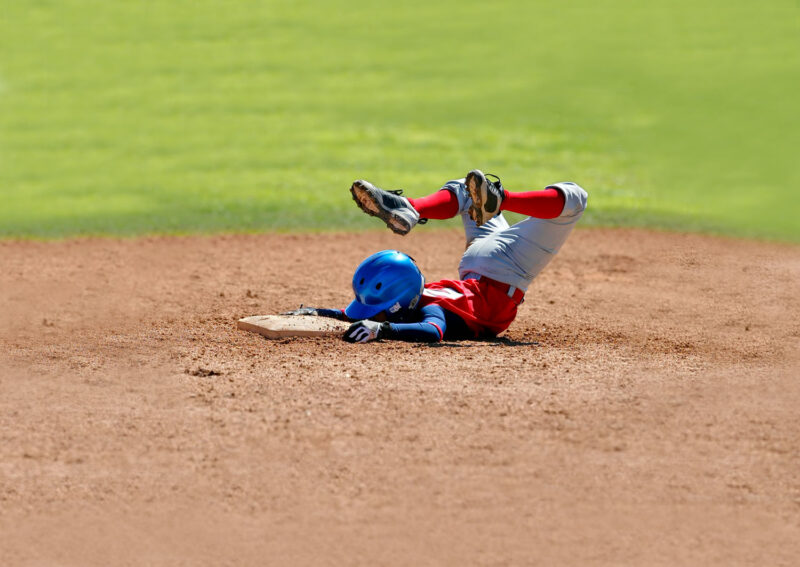
Has your child taken a fall and injured their teeth?
Here’s how to handle it on your own with two practical tips!
Let’s be honest: being stuck at home for weeks can be really tough, especially with kids who have big energy in small spaces!
Keeping an eye on them 24 hours a day is quite a challenge. They miss playing outdoors, and our homes often end up turning into soccer fields, games of tag, skating rinks… with accidents waiting just around the corner.
Today I want to teach you the two signs to recognize and the two simple tricks that can help you handle the situation as well as possible if your little rascals fall and hit their teeth on the floor, suffering a dental injury.
It happens all the time: playing with brothers and sisters, falling off a chair, or simply slipping while mom is busy polishing the floor, and it’s the teeth that pay the price!
Often the damage isn’t visible right away but can show up a few days later.
On that note, let me tell you about something that happened to me just a few days ago. It involves Martina, age 4, my cousin’s daughter. About 15 days ago she fell and hit her little face on the floor, and her mother didn’t worry too much because she only noticed a slight scrape on her lip, while Martina, whimpering just a tiny bit as little kids feel they have to, wasn’t in pain and went right back to playing.
Later, though, about fifteen days afterward, her mom called me, alarmed, telling me that Martina’s upper front tooth had turned dark.
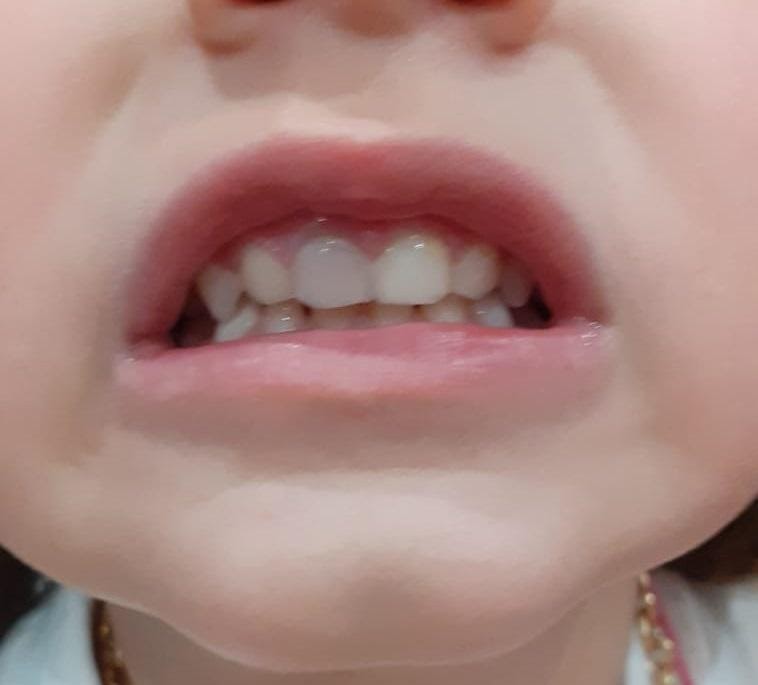
What happened is that the injury damaged the blood vessels that “nourish” the tooth, causing it to lose vitality and leading to a change in color.
So the FIRST sign is a little tooth that has turned dark some time after an injury.
Now for the SECOND sign. This one often appears later, weeks after the injury. It’s a fistula. Have you heard the word before but aren’t quite sure what it is?
Technically, it’s a channel that connects the inside of the body to the outside, but to put it simply, it looks like a small “pimple” that now and then releases pus. We often notice it because of its typical bad taste.
Just lift your child’s lip and you’ll spot it right away on the gum.
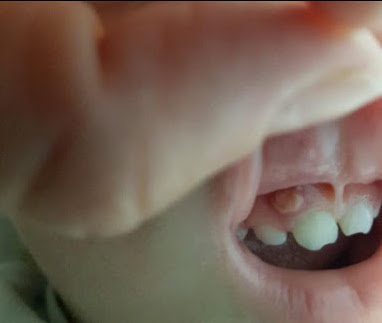
It’s the result of an infection that developed after the tooth lost its vitality. The infection spreads, and when it opens a passage to the outside, that’s when the fistula appears.
So, to recap
if you notice:
- A darkened tooth
- A small “pimple” on the gum
and you remember that your child had a fall in the previous days, don’t hesitate to contact us (WhatsApp too: +39 351 98 00 744). We’ll tell you exactly what to do!
With that said, I promised that today I would teach you 2 simple tricks recommended by the IADT, that is, the International Association of Dental Traumatology, not the neighborhood bowling club

Note that the two tips below apply to permanent teeth, not baby teeth
What should you do?
- If the tooth has broken: look for the fragment, because it can be reattached. Then keep it in a glass of saline solution; alternatively you can use milk or even your child’s saliva (if you can manage it!)
- If the whole tooth has come out: find it, pick it up by the crown (not the root) and rinse it under running water (make sure you’ve plugged the drain first… you don’t want to risk losing it if it slips!).

Now, dear mom, you’ll need to be brave and try to put the tooth back in place. Yes, you read that right! It’s easier than it seems: you need to try to reposition it in its socket, because the less time it spends outside the mouth, the better the chances of saving the tooth.
Done?
Great! You’ve now handled the emergency and gained precious minutes. All that’s left is to contact us as soon as possible, because the most important thing is speed! The sooner you act, the better the chance of saving the tooth!