White spots on tooth enamel
White or brown spots on teeth? Fluorosis, white spots, MIH and discoloration: how to recognize enamel defects and how they are treated.
Enamel hypomineralization: how to spot it and how to treat it.
Tooth enamel is the substance that covers the crown of a tooth. It is extremely hard and is made up of 96% hydroxyapatite (a calcium compound) and only 4% organic matter.
Sometimes, unfortunately, and for a variety of reasons, a mineralization defect can develop in the enamel while it is forming. This results in “weak” enamel that can easily break down and form cavities similar to those caused by tooth decay.
Enamel that isn’t fully mineralized is easy to spot because it has a different color and distinctive features. Some examples:
- Fluorosis: taking in too much fluoride can lead to the formation of fluorapatite instead of hydroxyapatite. It shows up as white spots or streaks.
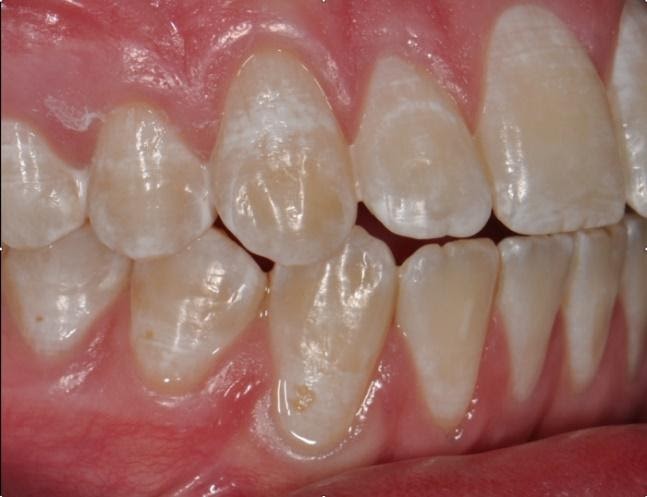
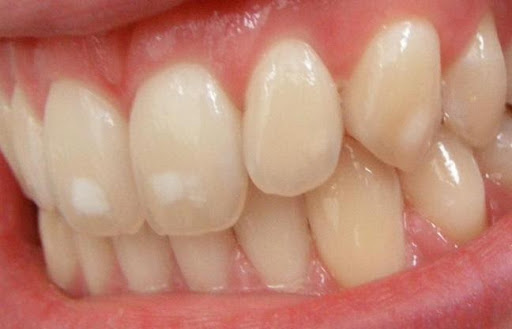
- White spots: actual white patches that already indicate an active stage of tooth decay.
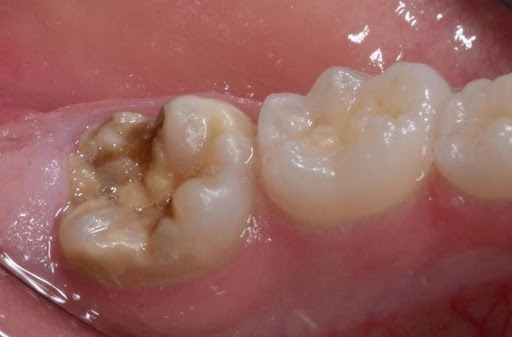
- Molar incisor hypomineralization (MIH): affects the first permanent molars and the incisors. The lesions look light brown
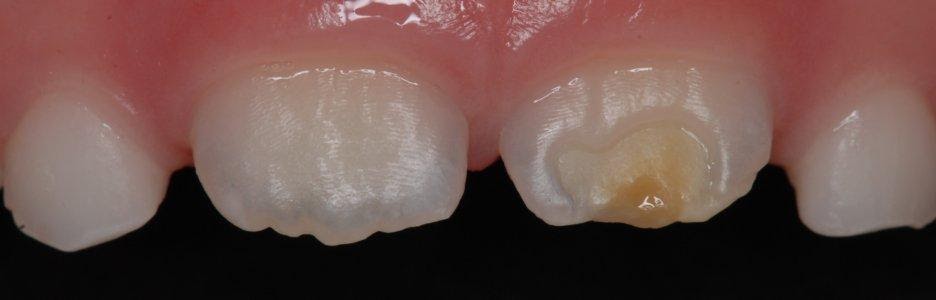
Traumatic/infectious discoloration: usually affects a single tooth and is caused by a past injury or infection involving the corresponding baby tooth
A thorough exam will let us identify the cause of these lesions and, as a result, set up a treatment plan specific to that type of defect.